
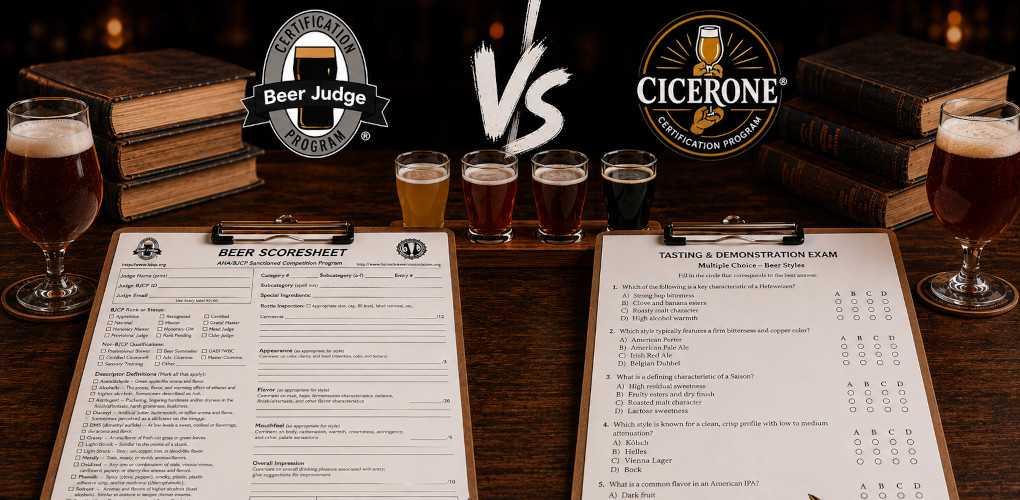

Probabilmente è passato in sordina, ma il 5 luglio si terrà in Italia, per la prima volta in assoluto, l’esame Tasting & Demonstration del Certified Cicerone®. Sarà organizzato da Personal Brewery, a Milano. Non è una cosa da poco.
Nonostante la mia tendenza a raccontare tutto quello che faccio in ambito birrario qui sul blog, non ho ancora mai parlato del percorso di certificazione Cicerone. O meglio, ne ho parlato marginalmente in un vecchio post, dove affrontavo il tema della certificazione dei giudici in generale. Oggi vorrei raccontarlo in maniera più approfondita, per dare un quadro di questo percorso di certificazione che trovo molto interessante: per certi versi simile al BJCP, per altri decisamente diverso.
In questi giorni mi sto preparando per sostenere la parte pratica dell’esame che si terrà a luglio da Personal Brewery. Ho già superato l’altra parte dell’esame, il Written Exam, lo scorso agosto, con un punteggio di 95/100. Il Written Exam del Cicerone è un esame di tre ore che si può sostenere online; ha molti punti in contatto con il Written Exam del BJCP, ma anche differenze importanti.
Partiamo con ordine e cerchiamo intanto di capire cos’è il Cicerone Program, a cosa serve e quali sono le principali differenze rispetto al BJCP. Per chi non conoscesse il BJCP, rimando ai tanti post della sezione del blog dedicata al BJCP. Segnalo, in particolare, il post in cui racconto in italiano come funziona il programma BJCP.
Come funziona il programma Cicerone
Il Cicerone è stato fondato in America nel 2008 da Ray Daniels. In molti avranno sentito nominare Daniels soprattutto per il libro “Designing great beers” tradotto in italiano come “Progettare grandi birre”. Dal 2024 il Cicerone è passato nelle mani di Dan Imdieke e Jason Pratt, due Master Cicerone che hanno acquistato i diritti del programma da Ray Daniels.
Il Cicerone è un percorso di certificazione rivolto soprattutto a chi lavora nel settore della birra. A differenza del BJCP, il cui obiettivo principale è la certificazione dei giudici, in particolare di quelli che operano nel mondo dei concorsi birrari, il Cicerone punta a certificare le competenze di chi opera nel settore, incluse quelle relative al servizio e all’abbinamento birra-cibo. Questi ultimi due aspetti, che nel BJCP non vengono trattati, rappresentano la differenza più sostanziale nei contenuti tra i due percorsi.
Il Cicerone non rilascia linee guida sugli stili, anzi, utilizza le linee guida del BJCP come riferimento per gli esami.
I livelli del Cicerone
Il Cicerone ha quattro livelli di certificazione che si possono ottenere superando specifici esami in ordine sequenziale. Ogni esame è via via più difficile, approfondito e costoso (in termini di quota di iscrizione) del precedente.
Livello 1 – Certified Beer Server Esame online da 60 domande a risposta multipla, da completare in 30 minuti. Si supera prendendo almeno 75% (45 risposte corrette). Nessun prerequisito viene richiesto in quanto questo livello è il punto di ingresso del percorso di certificazione. Copre le basi del servizio, i principali stili birrari e la gestione della qualità della birra. Chi supera questo livello non può fregiarsi del titolo di Cicerone: il titolo spetta solo a chi raggiunge almeno il Livello 2, il Certified Cicerone®. Questo esame è abbastanza semplice da passare per chi ha una buona conoscenza di stili e servizio, meno per chi si è avvicinato da poco a questo mondo. Al momento, i Certified Beer Server sono molti nel mondo: circa 163.000, di cui 81 in Italia.
Livello 2 – Certified Cicerone® L’esame si divide in due parti: il Written Exam (online) e il Tasting & Demonstration (in presenza). Per passare serve un punteggio complessivo di almeno 80%, con un minimo del 70% nella parte pratica. Copre stili, ingredienti, processo produttivo, servizio, difetti e abbinamento birra-cibo. Da questo secondo livello il cerchio si restringe molto: oggi ci sono nel mondo circa 4.800 Certified Cicerone, di cui 3 in Italia.
Livello 3 – Advanced Cicerone® Anche qui due componenti: Written Exam (sempre online) e una sessione in presenza che include tasting panel e due esami orali. La parte pratica in presenza diventa impegnativa: una intera giornata tra assaggi, riconoscimento dei difetti, interrogazioni varie. Il punteggio minimo è 80% complessivo, ma la soglia minima per il tasting sale al 75%. Il livello di dettaglio richiesto è decisamente più alto rispetto al Livello 2, ma i temi sono gli stessi. Nel mondo ci sono al momento 210 Advanced Cicerone; nessuno in Italia, 2 in Europa (1 in Spagna, 1 in Olanda).
Livello 4 – Master Cicerone® Il livello più alto. Esame completamente in presenza. Richiede una conoscenza enciclopedica della birra a 360 gradi: stili, processo, abbinamenti, spillatura, valutazione sensoriale. Il voto minimo per passare sale all’85%. Sono 29 i Master Cicerone® nel mondo, di cui 2 in Europa (tutti e due in UK di cui uno è James Watt, cofondatore di Brewdog).
I materiali di studio
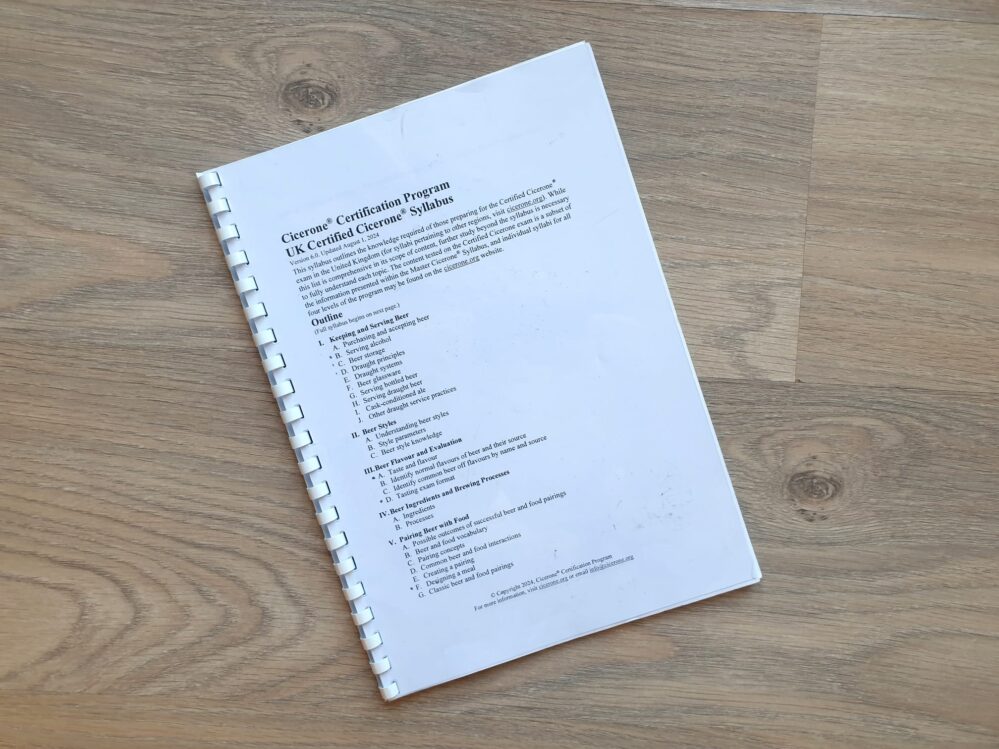
Il Syllabus è il documento ufficiale che definisce gli argomenti d’esame, scaricabile gratuitamente dal sito in PDF e disponibile in più lingue. Ciascun livello ha il suo syllabus. È il punto di partenza obbligato prima di qualsiasi altra risorsa. Si tratta tuttavia di un mero indice dei contenuti che si deve conoscere per superare gli esami, non vero e proprio materiale di studio.
A differenza del BJCP, il Cicerone offre corsi a pagamento, disponibili online, prodotti direttamente dal Cicerone. BeerSavvy® è pensato per il Livello 1 (Certified Beer Server), mentre la serie Road to Cicerone® copre il Livello 2 con sei moduli acquistabili separatamente, focalizzati su produzione, ingredienti, servizio e sugli stili di specifiche aree geografiche.
Le aree tematiche da studiare sono le stesse per tutti i livelli, con profondità crescente:
- Keeping & Serving Beer (conservazione e servizio)
- Beer Styles (stili birrari)
- Beer Flavor and Evaluation (valutazione sensoriale e difetti)
- Beer Ingredients and Brewing Processes (ingredienti e processo produttivo)
- Pairing Beer with Food (abbinamento birra-cibo)
Nel Livello 1 (Certified Beer Server), le cinque aree del Syllabus sono trattate a livello introduttivo. Per gli stili si richiede una conoscenza qualitativa dei principali parametri (colore, amaro, ABV) e delle caratteristiche degli stili per regione geografica, con riferimento alle linee guida BJCP. Per la valutazione sensoriale si devono conoscere i principali difetti, senza però doverli identificare alla cieca (l’esame è solo online). Gli ingredienti sono trattati a livello molto base. L’abbinamento birra-cibo è appena accennato e di rilevanza marginale.
Nel Livello 2 (Certified Cicerone®), le stesse cinque aree vengono affrontate con molto più dettaglio. La parte sul servizio richiede una conoscenza approfondita della gestione degli impianti di spillatura, la manutenzione, i problemi di qualità e il servizio. Per gli stili la conoscenza deve essere solida e dettagliata, con storia, caratteristiche e parametri precisi per ogni stile. La valutazione sensoriale richiede di saper identificare i difetti e descriverne le cause (esame di assaggio in presenza). Gli ingredienti e il processo produttivo vengono trattati con discreta profondità. L’abbinamento birra-cibo diventa un argomento vero e proprio, con principi e tecniche da conoscere e saper applicare, anche se sempre di rilevanza marginale ma superiore rispetto al Livello 1.
Per Advanced e Master il livello di conoscenza richiesto è davvero alto, per il Master ai limiti dell’umanamente gestibile. Em Sauter, Advanced Cicerone, riassume l’esame per il livello Master con queste parole sul sito “The Alcohol Professor“: “The Master Cicerone exam is one of the hardest exams in the world […] There are sixteen essays, twelve oral interviews and eight tasting panels covering beer styles, brewing, ingredients, food pairing, flavor evaluation, and draft dispense.”
Tutti gli esami si fanno in inglese; è disponibile lo spagnolo ma non l’italiano.
Principali differenze tra BJCP e Cicerone
Fino al Livello 2, la complessità degli esami del Cicerone non è molto diversa da quella del BJCP, anche se hanno alcune differenze sostanziali. Dal Livello 3 (Advanced) in poi il Cicerone è davvero tosto, molto più del BJCP.
I contenuti del Written Exam del Cicerone sono molto simili a quelli del BJCP, ma l’impostazione dell’esame è molto diversa. Quello del Cicerone è online e dura tre ore, mentre il Written Exam del BJCP è in presenza e dura un’ora e mezza. Il Written del Cicerone è per la maggior parte composto da domande a risposta multipla: ci sono da scrivere tre brevi saggi su processo, stili e abbinamenti, ma non si deve scrivere moltissimo. Il Written del BJCP è molto più complesso in termini di articolazione delle risposte, si deve scrivere molto di più (e soprattutto si scrive a mano).
Entrambi gli esami prevedono una prova di degustazione alla cieca, ma con approcci molto diversi. Il BJCP richiede la compilazione di scoresheet per sei birre, valutando accuratezza del punteggio, percezione, capacità descrittiva, feedback e completezza (qui ulteriori dettagli). Il Cicerone combina invece una degustazione strutturata con una dimostrazione pratica (ne parleremo meglio nel prossimo post).
La differenza più rilevante tra questi due approcci, a mio avviso, riguarda l’oggettività. Nel Tasting Exam del BJCP, sia l’accuratezza del punteggio che la percezione vengono confrontate con quelle dei proctor presenti all’esame che assaggiano le stesse birre, il che introduce una variabile soggettiva legata alla loro esperienza e competenza. Nel Cicerone non esiste questo confronto diretto: le risposte vengono valutate rispetto a criteri predefiniti e centralizzati (le birre sono difettate appositamente con le fialette), rendendo il processo meno esposto alla competenza del singolo valutatore in loco.
La differenza non è casuale: riflette gli obiettivi diversi dei due programmi. Il BJCP è pensato per chi vuole giudicare birre nei concorsi, in particolare quelli per homebrewer, e valuta quindi la capacità di descrivere e valutare una birra a tutto tondo. Il Cicerone si rivolge invece principalmente ai professionisti del settore, con un focus più orientato al servizio e all’identificazione di difetti prima che la birra arrivi nel bicchiere o sullo scaffale. Non si tratta di stabilire quale delle due certificazioni sia la migliore: sono semplicemente due strumenti pensati per contesti diversi.
Sul piano dei contenuti, il Cicerone tocca solo marginalmente la produzione, che invece ha un peso significativo negli esami BJCP, soprattutto nel Written Exam, dove è richiesta anche la formulazione di una ricetta. Il BJCP, di contro, non affronta i temi del servizio e dell’abbinamento birra-cibo, entrambi centrali nel percorso Cicerone. Il servizio e la manutenzione dell’impianto entrano in gioco già al Livello 1 del Cicerone, mentre gli abbinamenti acquisiscono sempre più importanza nei livelli superiori, fino a richiedere una conoscenza approfondita delle ricette e delle tecniche di cucina nel livello Master Cicerone.
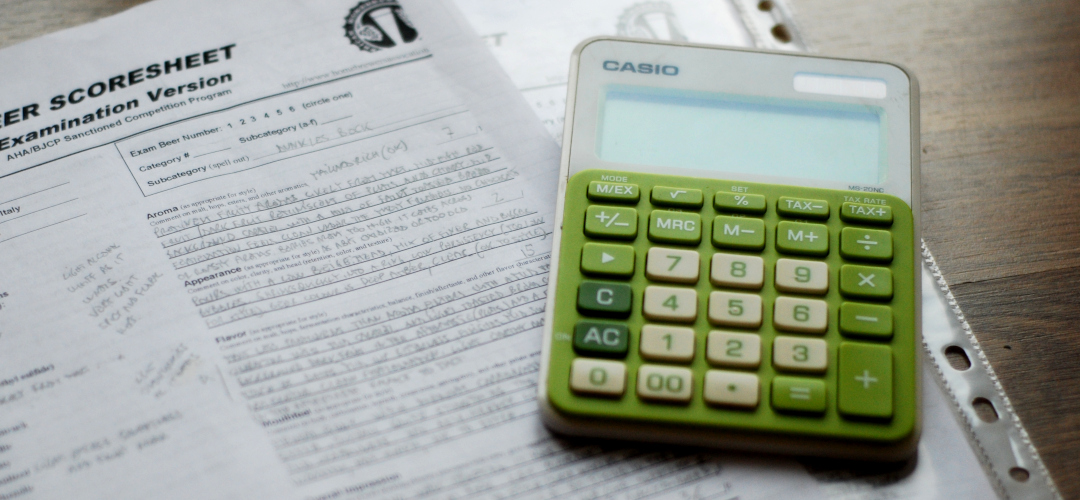
Ci sono differenze significative anche dal punto di vista economico. Gli esami del Cicerone costano parecchio. Mentre per gli esami BJCP non si paga mai più di 40$, quelli del Cicerone partono dai 79$ del Livello 1, passando per i circa 450$ del secondo per arrivare a circa 1000$ dell’ultimo. Se si viene bocciati e si ritenta si paga un po’ meno, ma restano costi piuttosto alti.
In sostanza, il Cicerone ha prove d’esame diverse per ogni livello, mentre nel BJCP le prove d’esame sono sempre le stesse, il livello raggiunto si basa sul punteggio con cui si passano le singole prove d’esame. Nel BJCP sono richiesti anche punti esperienza per passare di livello, ma idealmente si potrebbero sostenere Tasting e Written una sola volta e arrivare direttamente al livello Master, una volta ottenuti i punti esperienza necessari (in realtà, per sostenere il Written Exam servono almeno 10 punti esperienza, ma si accumulano in fretta). Nel Cicerone per ogni livello è obbligatorio sostenere altri esami e non ci sono punti esperienza.
Meglio il BJCP o il Cicerone?
Non saprei dire se uno dei due percorsi è meglio dell’altro, ma sicuramente diventare giudici BJCP è molto più semplice. E questo, secondo me, non è un bene per il BJCP.
Generalizzando, potremmo mettere il Certified Cicerone® (Livello 2 del Cicerone) sullo stesso piano del livello National del BJCP: entrambi sono piuttosto difficili da raggiungere; entrambi, a mio avviso, certificano un’ottima preparazione in termini di competenze e di esperienza.
Io, ad esempio, sono riuscito a passare con un buon voto il Written del Cicerone semplicemente integrando abbinamenti e servizio a quanto avevo già studiato per il Written Exam del BJCP, senza eccessiva difficoltà. Come già detto, il livello di competenze richieste è molto simile.
Il confronto tra i due programmi, però, non regge per i livelli precedenti.
Per diventare giudici BJCP di livello base (Recognized) è sufficiente passare il Tasting Exam con un voto di 60/100. Un esame che passa praticamente chiunque (lo dico con cognizione di causa, visto che correggo questi esami da più di due anni). Chi passa gli esami con il livello base Recognized è libero di presentarsi in giro come giudice BJCP, senza necessariamente specificare il livello.
Tutto ciò si traduce, nella pratica, in un bacino piuttosto ampio di giudici Recognized con una preparazione ancora lacunosa, sebbene in alcuni casi animati da buona volontà, che partecipano ai concorsi presentandosi semplicemente come “giudici BJCP”. Esistono naturalmente eccezioni, ma il problema è reale e andrebbe affrontato con serietà: nel lungo periodo, questa situazione rischia di erodere la reputazione del programma BJCP stesso (lo sta già facendo, a mio avviso), che merita invece di essere associato a uno standard di qualità riconoscibile e affidabile.
Di contro, chi invece raggiunge il primo livello della certificazione Cicerone (Certified Beer Server) non può fregiarsi del titolo Cicerone. Non ci si può presentare come Cicerone fino a quando non si raggiunge il livello Certified Cicerone®. Questa, secondo me, è una differenza molto importante tra i due percorsi di certificazione.
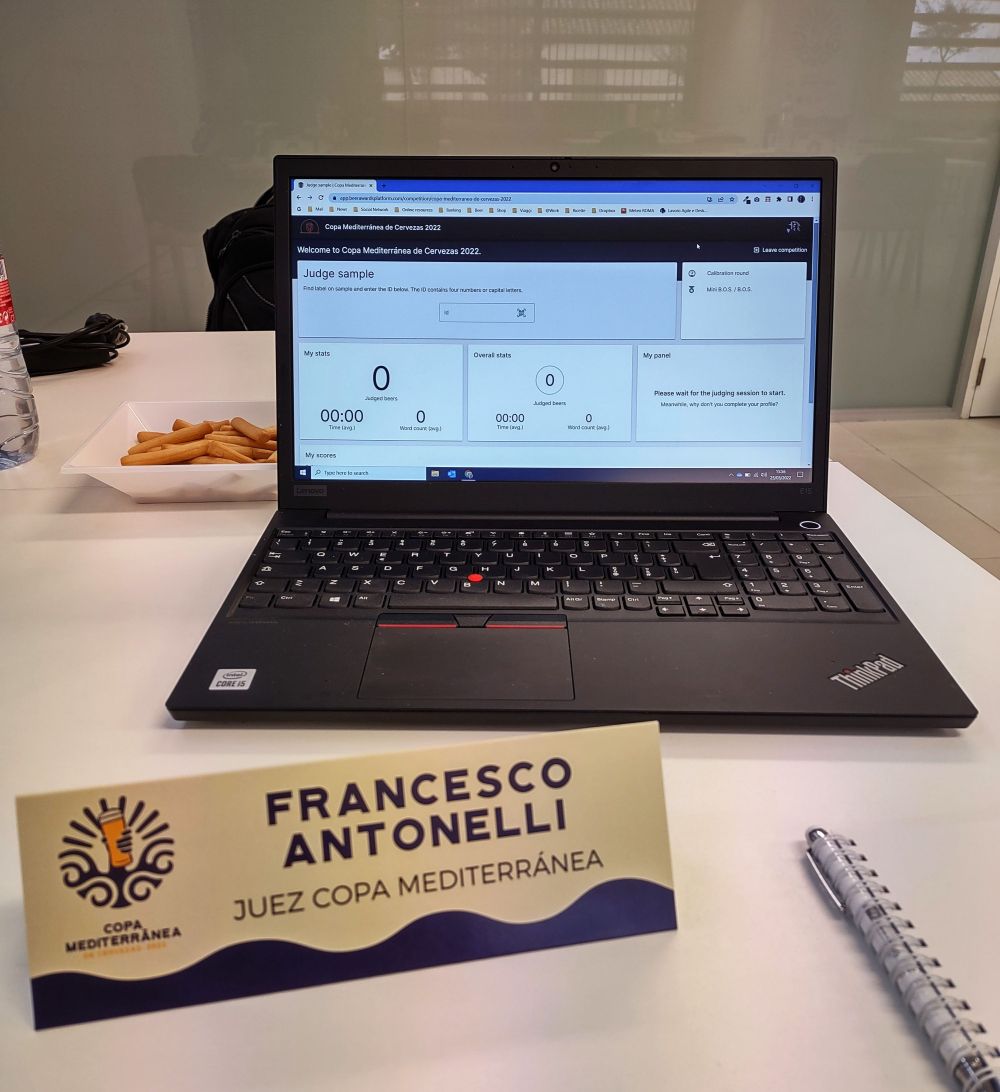
Sostengo da tempo che il BJCP dovrebbe adottare criteri più severi nella certificazione dei giudici, e spero che questo avvenga in futuro. Passare il Tasting Exam con un voto di 60/100 è ad oggi, secondo me, troppo facile. Lo schema di correzione attuale, per come è pensato, rende difficilissimo bocciare. Lo dico avendo corretto molti esami in questi due anni: mi sono trovato a far passare l’esame a persone che non credo chiamerei in giuria a un mio concorso. E non si tratta solo di esperienza – da qualche parte si deve pur iniziare – ma di attitudine e competenze, che invece dovrebbero trasparire sin da subito quando si corregge un esame.
Un ultimo aspetto da considerare è il costo degli esami. Nel caso Cicerone, la spesa elevata funge da filtro selettivo: se da un lato rappresenta una barriera per chi dispone di risorse economiche limitate, dall’altro scoraggia chi si avvicina alla certificazione senza una reale determinazione. Il BJCP, al contrario, adotta una politica di costi contenuti che rende il percorso accessibile a una platea più ampia; questo però ha un rovescio della medaglia: molti candidati tendono a ripetere gli esami più volte finché non ottengono il punteggio desiderato, generando un elevato volume di esami di scarsa qualità che sovraccarica inutilmente il lavoro dei volontari che si offrono per correggerli.
In conclusione, BJCP e Cicerone sono percorsi di Certificazione simili per alcuni aspetti ma molto diversi per altri. Ho trovato spunti molto interessanti in entrambi e in ogni caso rappresentano un forte stimolo per chi vuole studiare e migliorarsi.
Altri post sul Cicerone:
- Come funziona l’esame Tasting and Demo
- Impressioni a caldo sul mio esame Tasting and Demo
- Guida al Written Exam

What is the Cicerone Program and how is it different from the BJCP
It may have slipped under the radar, but on July 5th, for the very first time in Italy, the “Tasting & Demonstration” exam for the Certified Cicerone® will be held. It will be organized by Personal Brewery, in Milan. This is no small thing.
Despite my tendency to write about everything I do in the world of beer here on the blog, I have never talked about the Cicerone certification program. Well, I did mention it briefly in an old post where I touched on beer judge certification in general. Today I’d like to go into more depth, to give an overview of this certification path that I find very interesting: in some ways similar to the BJCP, in others quite different.
These days I’m preparing to take the practical part of the exam, which will be held in July at Personal Brewery. I already passed the other part of the exam, the Written Exam, last August, with a score of 95/100. The Written Exam is a three-hour exam that can be taken online; it has a lot in common with the BJCP Written Exam, but also some important differences.
Let’s start from the beginning and try to understand what the Cicerone Program is, what it’s for, and what the main differences are compared to the BJCP. For those unfamiliar with the BJCP, I refer you to the many posts in the BJCP section of the blog (in particular the post where I explain — in Italian — how the BJCP program works).
How the Cicerone program works
The Cicerone was founded in America in 2008 by Ray Daniels, whom many will know above all for his book “Designing Great Beers”.Since 2024, the Cicerone has been in the hands of Dan Imdieke and Jason Pratt, two Master Cicerones who purchased the rights to the program from Ray Daniels.
The Cicerone is a certification path aimed primarily at those who work in the beer industry. Unlike the BJCP, whose main goal is the certification of judges — particularly those who operate in the world of beer competitions — the Cicerone aims to certify the skills of industry professionals, including those related to beer service and food pairing. These last two aspects, which are not covered by the BJCP, represent the most substantial difference in content between the two programs.
The Cicerone does not publish its own style guidelines; instead, it uses the BJCP guidelines as a reference for its exams.
The Cicerone levels
The Cicerone has four levels of certification, which can be obtained by passing specific exams in sequential order. Each exam is progressively more difficult, more in-depth, and more expensive (in terms of registration fees) than the previous one.
Level 1 – Certified Beer Server. An online exam consisting of 60 multiple-choice questions, to be completed in 30 minutes. A score of at least 75% (45 correct answers) is required to pass. No prerequisites are required, as this level is the entry point of the certification path. It covers the basics of beer service, the main beer styles, and beer quality management. Those who pass this level cannot use the title of Cicerone: the title is reserved for those who reach at least Level 2, the Certified Cicerone®. This exam is fairly straightforward for those with a solid knowledge of styles and service, less so for those who are new to the world of beer. There are around 163,000 Certified Beer Servers in the world.
Level 2 – Certified Cicerone®. The exam is divided into two parts: the Written Exam (online) and the Tasting & Demonstration (in person). A minimum overall score of 80% is required to pass, with a minimum of 70% on the Tasting & Demonstration component. It covers styles, ingredients, the brewing process, service, off-flavors, and food pairing. From this second level the pool narrows considerably: currently, there are around 4,800 Certified Cicerones in the world.
Level 3 – Advanced Cicerone®. Again two components: a Written Exam (also online) and an in-person session that includes tasting panels and two oral exams. The in-person practical component is demanding: a full day of tastings, off-flavor identification, and various oral assessments. The minimum score is 80% overall, but the minimum threshold for the tasting rises to 75%. The level of detail required is significantly higher than Level 2, though the topics are the same. Currently, there are 210 Advanced Cicerones in the world.
Level 4 – Master Cicerone®. The highest level of the Cicerone Program. The exam is conducted entirely in person. It requires encyclopedic knowledge of beer from every angle: styles, process, pairings, draft dispense, sensory evaluation. The minimum passing score rises to 85%. Currently, there are 29 Master Cicerones in the world.
Study materials
The Syllabus is the official document defining the exam topics, available as a free PDF download from the website in multiple languages. Each level has its own syllabus. It is the mandatory starting point before any other resource. However, it is merely an index of the contents one must know in order to pass the exams, not actual study material.
Unlike the BJCP, the Cicerone offers paid courses, available online, produced directly by the Cicerone. BeerSavvy® is designed for Level 1 (Certified Beer Server), while the Road to Cicerone® series covers Level 2 with six separately purchasable modules, focused on production, ingredients, service, and the styles of specific geographic regions.
The subject areas to study are the same across all levels, with increasing depth:
- Keeping & Serving Beer
- Beer Styles
- Beer Flavor and Evaluation
- Beer Ingredients and Brewing Processes
- Pairing Beer with Food
At Level 1 (Certified Beer Server), the five syllabus areas are covered at an introductory level. For styles, a qualitative knowledge of the main parameters (color, bitterness, ABV) and the characteristics of styles by geographic region is required, with reference to the BJCP guidelines. For sensory evaluation, the main off-flavors must be known, but identifying them blind is not required (the exam is entirely online). Ingredients are covered at a very basic level. Food pairing is barely touched upon and is of marginal relevance.
At Level 2 (Certified Cicerone®), the same five areas are approached in much greater detail. The service section requires an in-depth knowledge of draft system management, maintenance, quality issues, and service. For styles, knowledge must be solid and detailed, with precise history, characteristics, and parameters for each style. Sensory evaluation requires the ability to identify off-flavors and describe their causes (oral exam). Ingredients and the brewing process are covered with reasonable depth. Food pairing becomes a genuine topic, with principles and techniques to know and be able to apply, though still of marginal but greater relevance than at Level 1.
For Advanced and Master, the level of knowledge required is truly high — for Master, bordering on the humanly manageable. Em Sauter, Advanced Cicerone, summarizes the Master level exam with these words on the site “The Alcohol Professor”: “The Master Cicerone exam is one of the hardest exams in the world […] There are sixteen essays, twelve oral interviews and eight tasting panels covering beer styles, brewing, ingredients, food pairing, flavor evaluation, and draft dispense.”
Main differences between the BJCP and the Cicerone
Up to Level 2, the complexity of the Cicerone exams is not very different from that of the BJCP, though there are some substantial differences. From Level 3 (Advanced) onwards, the Cicerone is genuinely tough — much more so than the BJCP.
The content of the Cicerone Written Exam is very similar to that of the BJCP, but the format of the exam is very different. The Cicerone’s is online and lasts three hours, while the BJCP Written Exam is in person and lasts an hour and a half. The Cicerone Written is largely composed of multiple-choice questions: there are three short essays to write on process, styles, and pairings, but there is not a great deal of writing involved. The BJCP Written is far more demanding in terms of the depth of answers required; you have to write much more (and above all, by hand).
Both exams include a blind tasting component, but with very different approaches. The BJCP requires the completion of scoresheets for six beers, evaluating scoring accuracy, perception, descriptive ability, feedback, and completeness (further details here). The Cicerone instead combines a structured tasting with a practical demonstration (we’ll cover this in more detail in the next post).
The most significant difference between these two approaches, in my view, concerns objectivity. In the BJCP Tasting Exam, both scoring accuracy and perception are compared against those of the proctors present at the exam who taste the same beers — which introduces a subjective variable tied to their experience and competence. In the Cicerone, no such direct comparison exists: answers are evaluated against predefined, centralized criteria (the beers are intentionally spiked with off-flavor compounds), making the process independent from the competence of the individual evaluator on site.
This difference is not coincidental: it reflects the different objectives of the two programs. The BJCP is designed primarily for those who want to judge beers in competitions, particularly homebrew competitions, and therefore evaluates the ability to describe and assess a beer comprehensively. The Cicerone, on the other hand, is aimed primarily at industry professionals, with a focus more oriented toward service and the identification of off-flavors before the beer reaches the glass or the shelf. The point is not to establish which certification is better: they are simply two tools designed for different contexts.
In terms of content, the Cicerone covers production only marginally, whereas it carries significant weight in the BJCP exams — particularly in the Written Exam, which also requires the formulation of a recipe. The BJCP, conversely, does not address beer service or food pairing, both of which are central to the Cicerone program. Service and draft system maintenance come into play as early as Level 1 of the Cicerone, while food pairings grow increasingly important at higher levels, eventually requiring an in-depth knowledge of recipes and culinary techniques at the Master Cicerone level.
Significant differences also exist from an economic standpoint. The Cicerone exams are expensive. While BJCP exams never cost more than $40, the Cicerone starts at $79 for Level 1, rises to around $450 for Level 2, and reaches approximately $1,000 for the final level. Retake fees are somewhat lower, but the costs remain quite high.
In essence, the Cicerone program features different exams for each certification level, whereas in the BJCP the exams are always the same — the level achieved simply depends on the score obtained in each individual test. The BJCP also requires experience points to advance through the levels, but in theory a candidate could take the Tasting and Written exams just once and reach the Master level directly, once the required experience points have been accumulated. In the Cicerone program, on the other hand, each level requires sitting additional exams, and there is no experience point system.
BJCP or Cicerone: which is better?
I couldn’t say which of the two programs is better, but becoming a BJCP judge is certainly much easier. And in my view, that is not a good thing for the BJCP.
Broadly speaking, we could place the Certified Cicerone® (level 2 of the Cicerone program) on a par with the National level of the BJCP: both are fairly difficult to achieve, and both, in my opinion, certify a solid level of knowledge in terms of skills and experience.
Personally, for example, I managed to pass the Cicerone Written exam with a good score simply by adding food pairing and beer service to what I had already studied for the BJCP Written Exam, without too much difficulty. As mentioned, the level of expertise required is very similar.
The comparison between the two programs, however, does not hold for the lower levels.
To become an entry-level BJCP judge (Recognized), it is enough to pass the Tasting Exam with a score of 60/100. An exam that virtually anyone passes — and I say this with some knowledge of the matter, having graded these exams for over two years. Those who pass at the Recognized level are free to present themselves as BJCP judges without necessarily specifying their level.
In practice, this results in a fairly large pool of Recognized judges with insufficient and often inadequate preparation — though in some cases well-intentioned — who participate in competitions simply presenting themselves as “BJCP judges”. Exceptions exist, of course, but the problem is real and should be taken into account: in the long run, this situation risks eroding the reputation of the BJCP program itself — and in my view, it already is — which instead deserves to be associated with a recognizable and reliable standard of quality.
On the other hand, those who achieve the first level of Cicerone certification (Certified Beer Server) cannot use the Cicerone title. One cannot present themselves as a Cicerone until they reach the Certified Cicerone® level (which implies having passed a difficult set of exams). This, in my opinion, is a very important distinction between the two certification paths.
I have been saying for a long time that the BJCP should adopt more demanding standards in its judge certification, and I hope this will happen in the future. Passing the Tasting Exam with a score of 60/100 is, in my opinion, too easy. The current grading rubric, as it is designed, makes it extremely difficult to fail a candidate. I say this having graded many exams over the past two years: I have found myself passing people I wouldn’t invite to judge at one of my own competitions. And it is not just a matter of experience — everyone has to start somewhere — but of aptitude and skills, which should be apparent from the very beginning.
One final aspect worth considering is the cost of the exams. In the case of the Cicerone, the high cost acts as a selective filter: on one hand it is a barrier for those with limited financial resources (and this is not that good), but on the other it discourages those who approach the certification without genuine commitment. The BJCP, by contrast, adopts a low-cost policy that makes the program accessible to a much wider audience; this, however, has a downside: many candidates tend to retake the exams repeatedly until they achieve the score they want, generating a high volume of poor-quality papers that unnecessarily burdens the volunteer graders who give their time to grade the exams.
In conclusion, the BJCP and the Cicerone are certification programs that are similar in some respects but very different in others. I have found genuinely valuable insights in both, and in any case they represent a strong incentive for anyone who wants to study and improve.
Other posts about the Cicerone exam:


Hi
Fidelity, Brew Dock and The Big Romance are all worth a visit.
Have a great trip!
I think this reply here is to my last newsletter where I was asking for any tips on pubs in Dublin. Thanks, noted!
Ah sorry, must have clicked the wrong link
No worries! Cheers.