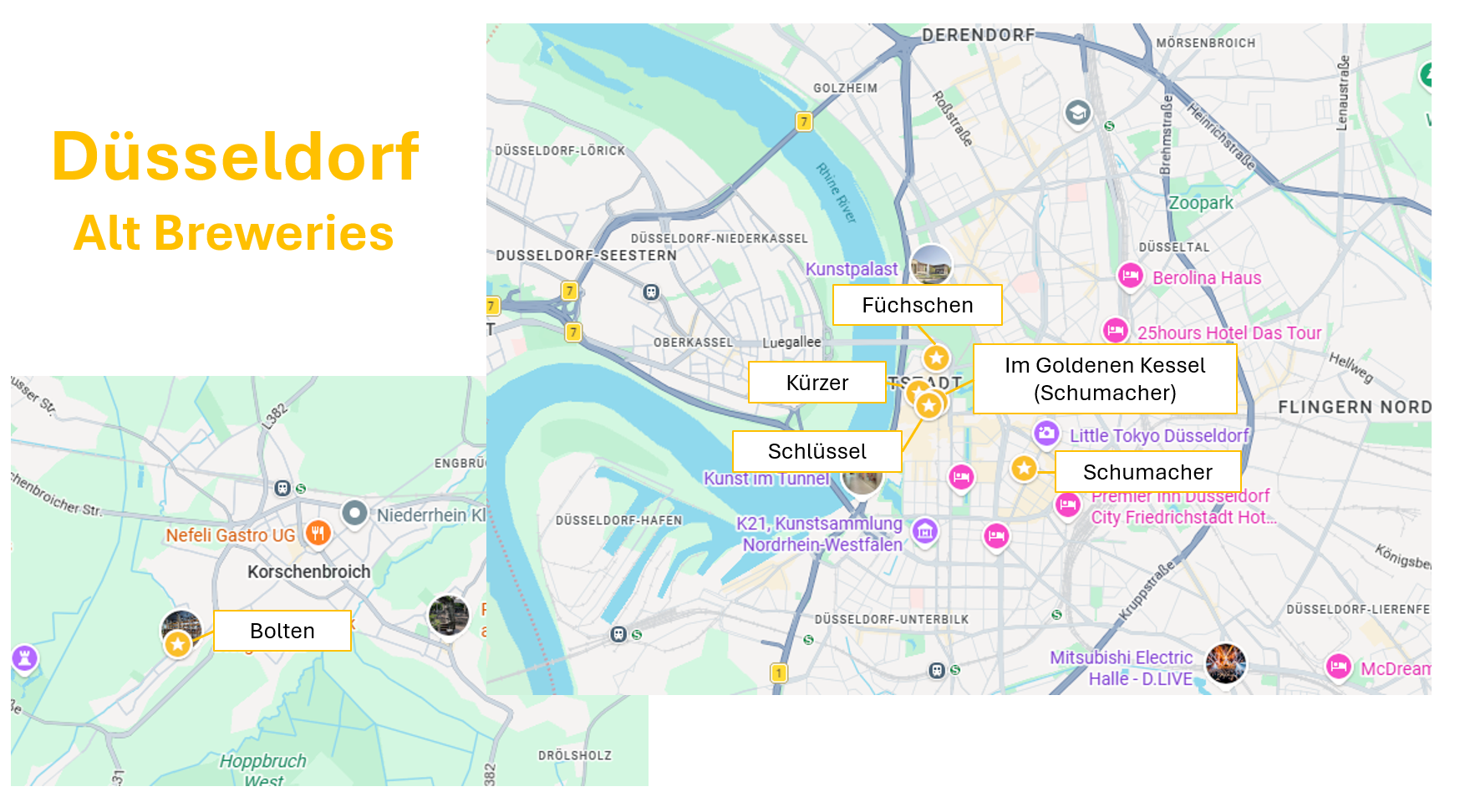
I’ve never been to Düsseldorf, but it’s a city with a character you can almost taste in a glass. Nestled along the Rhine in western Germany, Düsseldorf is fiercely proud of its brewing heritage. The city is famous for Altbier, a copper-colored ale brewed with traditional methods that have been carefully preserved for centuries.
Unlike lagers, which use bottom-fermenting yeast at colder temperatures, Altbier (literally “old beer”) is brewed with top-fermenting yeast. After primary fermentation at warmer temperatures (around 15-16°C), it undergoes a period of cold conditioning, which gives it a remarkably clean, crisp finish. The result is a balanced beer: malty and lightly caramelized on the palate, with a firm, dry bitterness from noble hops and a smooth, refreshing drinkability.
Düsseldorf is one of those trips that’s been on my wishlist forever, but I still haven’t managed to pack a bag and make it there. Over the years, I’ve tried to make up for it by scouting out pubs in Rome whenever they had a keg of Altbier on tap (I’ve managed to taste Uerige from the tap a couple of times), or by turning to online shopping. During the pandemic, I managed to get my hands on a 5-liter party keg of Schumacher Altbier on eBay, which I thoroughly enjoyed.
Then, as usual, my friends Daniele Cogliati and Angelo Ruggiero tipped me off about a beershop in Düsseldorf that actually ships to Italy (it’s called Brauart). I decided to go for it. My plan was to include Uerige’s classic Altbier in the order, but I accidentally selected their Radler instead. Not a big deal: Uerige is much easier to find (I’ve had it several times) and their Altbier is something of an outlier anyway.
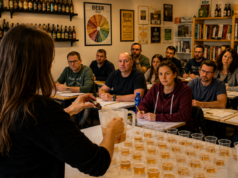
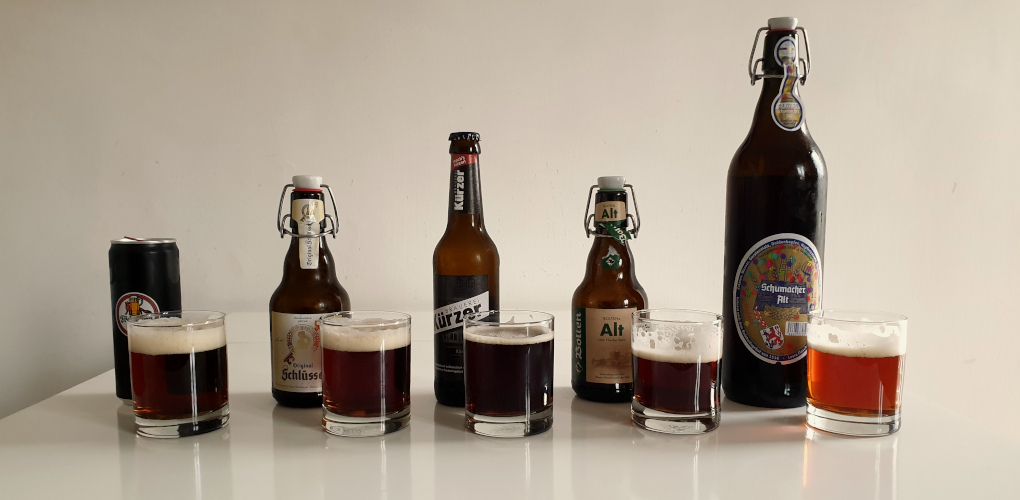
The beers had been in the fridge for a while, until I found the time to organize a small blind tasting and try them without knowing which was which. It was a very interesting experience. Here’s how it went.
Obviously, keep in mind that these are bottled beers, and some were close to their expiration date. Having them fresh on-site is surely a whole different story.
I have tried brewing an Altbier at home twice. The latest version turned out quite good. Take a look at my homebrewed Altbier recipe.
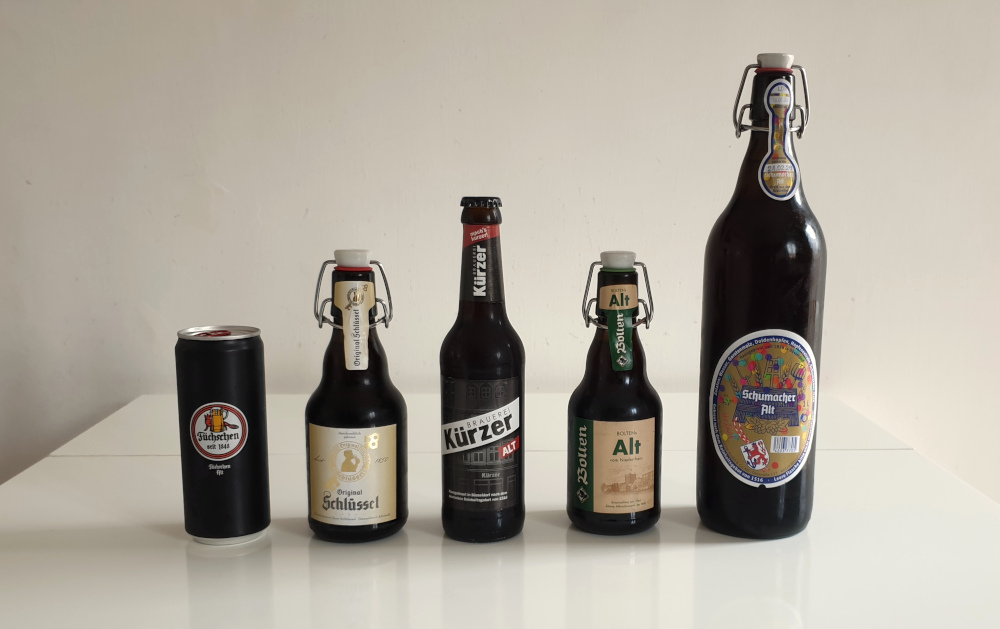
Original Schlüssel Alt
Hausbrauerei Zum Schlüssel is a cornerstone of Düsseldorf’s brewing tradition. Located in the center of the Altstadt (the old city), it has been a staple of the local community since its official founding in 1850, when today’s brewery building was purchased by a young baker who started to brew beer.
The site’s brewing heritage has records of beer production at this location dating back to 1632. Original Schlüssel has twice been awarded the gold medal for best Altbier at the European Beer Star in 2012 and 2014 (it won silver in 2024 and bronze in 2025)
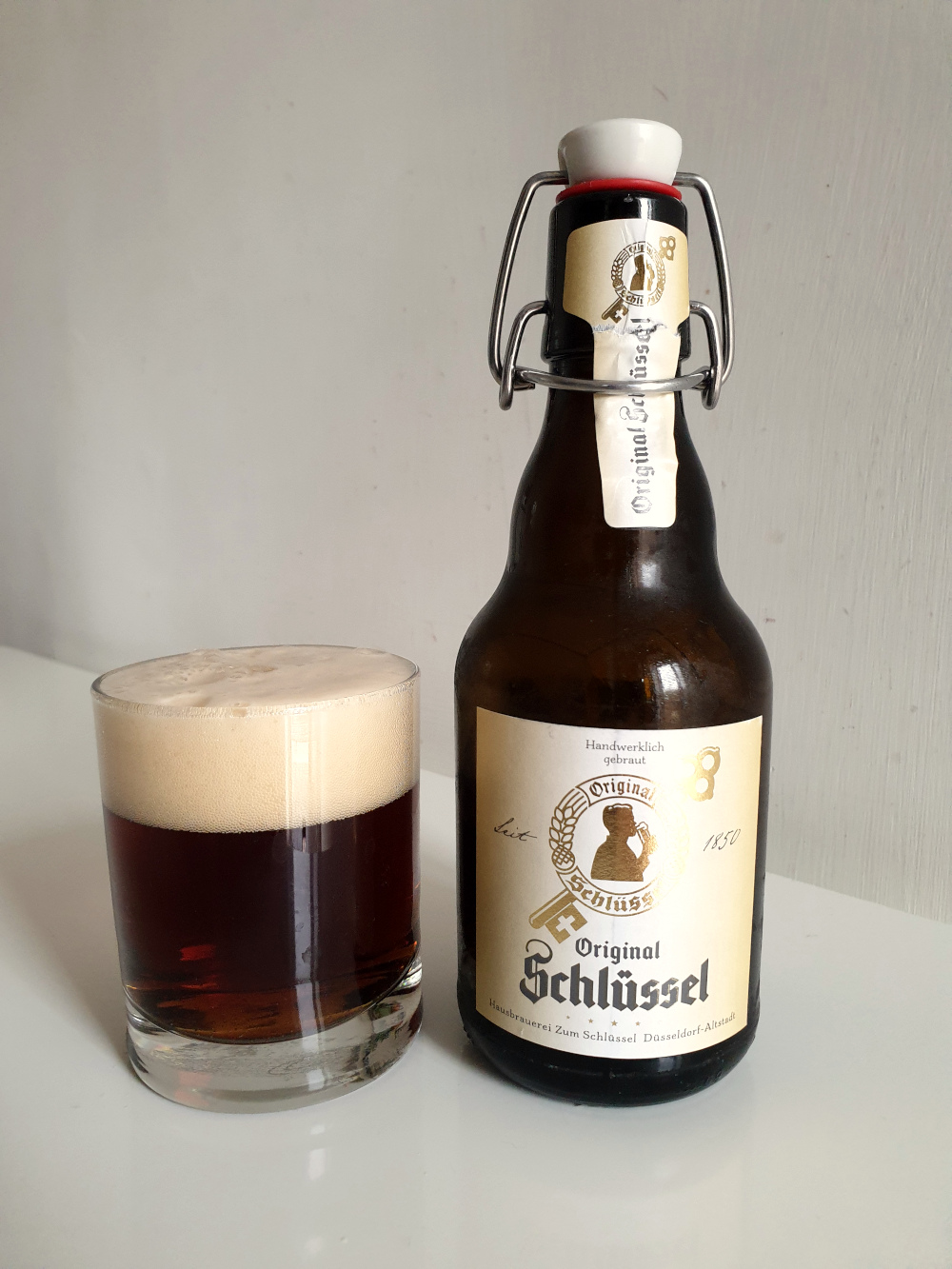
Best before: 9 March 2026 (less than a month remaining).
Deep amber with copper reflections.
The aroma is relatively faint, featuring light toast and charred bread crust. No hops or esters are present. Very low wet-cardboard oxidation.
On the palate, the roasted notes are more pronounced but do not linger on the finish, which is dry yet free of astringency. This felt like the driest beer of the flight. The bitterness is medium-high but quite smooth, with no sharp edges. The aftertaste reveals notes of toasted caramel.
Overall a good beer, though perhaps past its prime, as it’s within a month of its expiration date.
Brauerei im Füchschen / Füchschen Alt
Füchschen (meaning “little fox”) remains a family-owned business. It has been in the König family since 1908 and is currently led by Peter König. The Füchschen brewery is located at Ratinger Straße 28, in the heart of Düsseldorf’s Old Town.
In 2017, they broke tradition by introducing a Pilsner, which is quite rare for a classic Düsseldorf house brewery. Their Alt is available in cans. In 2015 the brewery was renewed, with the construction of a new fermentation cellar, and doubling of the storage capacity.
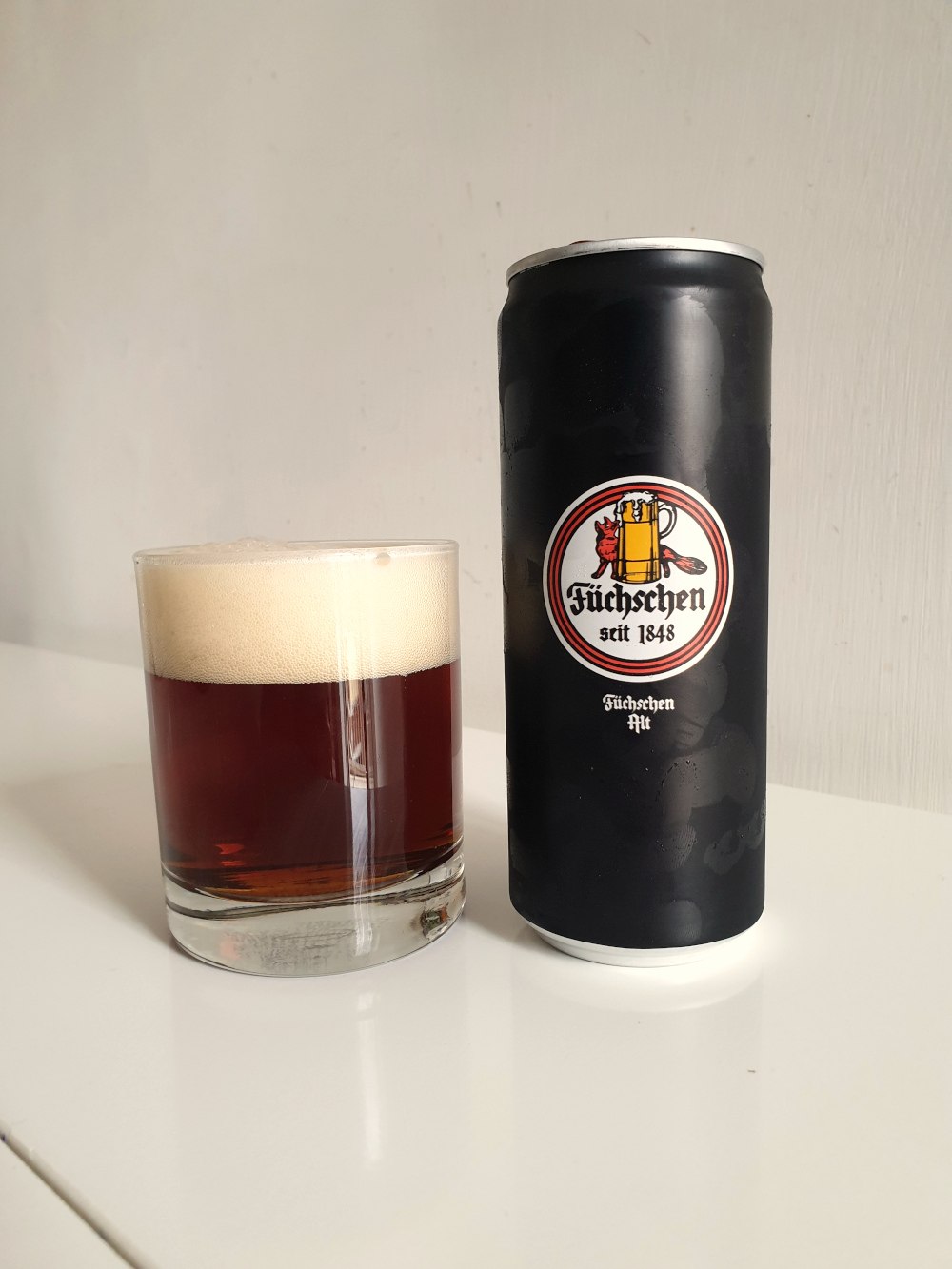
Best before: June 2026 (4 months remaining).
Mid amber with copper reflections.
Subtle sweet-like notes on the nose suggesting potential oxidation. Delicate roast profile with classic charred bread crust and faint caramel. The aroma is somewhat muted.
Light roasted malt flavor with a fairly intense, medium-high bitterness. Very lean body and good dryness on the palate. Slight astringency on the finish, likely from roasted malts. Faint herbal hop flavor.
This one is very good as well; I’m not sure the oxidation is actually present. I may have had the wrong impression. Similar in many respects to the Schlüssel, but with a slightly sharper bitterness and a light (pleasant) astringency in the finish.
Schumacher Alt
Brauerei Schumacher is widely considered the birthplace of modern Altbier. Founded in 1838, it is officially the oldest brewery in Düsseldorf. To celebrate their 175th anniversary, they created the 1838er, a more hop-forward version using Cascade and Galaxy hops, which gives it fruity notes of citrus and red berries, similar to an American Pale Ale.
Brauerei Schumacher serves its historic Altbier at two distinct locations in Düsseldorf: the Stammhaus on Oststraße 123, which is the main brewery and a massive, traditional beer hall located near the Central Station, and Im Goldenen Kessel on Bolkerstraße 44, their cozy, historic pub situated in the heart of the Altstadt.
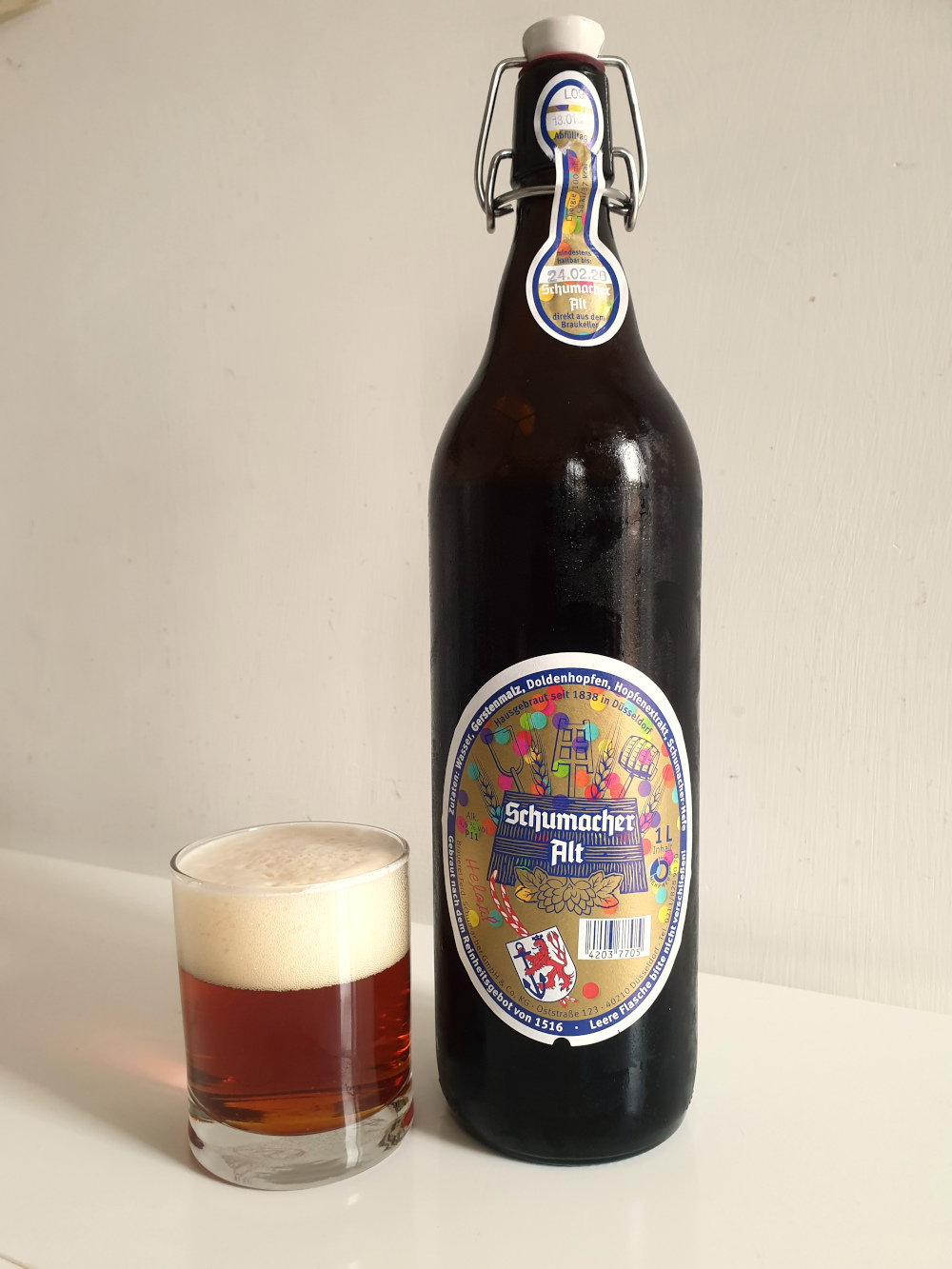
Best before: 24 February 2026 (expired 2 days ago).
Medium amber in color and easily recognizable within the flight.
Fairly clean and fresh on the nose despite being past the best-before date. Light toasted notes with no roasted character. Interesting citrus nuances reminiscent of orange and tangerine. Subtle bread crust.
Lean body and smooth mouthfeel with a slight initial sweetness quickly balanced by a medium-high bitterness and no astringency. Nutty afertaste. Light citrus pulp notes not found in the other Altbiers of the flight. Very subtle caramel.
Like Urige, Schumacher is also an outlier compared to the standard Düsseldorf Altbier profile. In this case, we don’t find the classic slightly charred and toasty notes typical of the others; instead, there’s a pleasant malty base reminiscent of hazelnut, along with citrus notes that could come from the hops but possibly from the malts as well (they recall the orange-like nuances I’ve found in some Märzen or Vienna beers).
Brauerei Kürzer Altbier
Brauerei Kürzer is the “new kid on the block” in Düsseldorf’s Altbier scene. Since hitting Kurze Straße in 2010, it’s been shaking things up by trading the old-school wooden panels for a cool, modern industrial vibe. 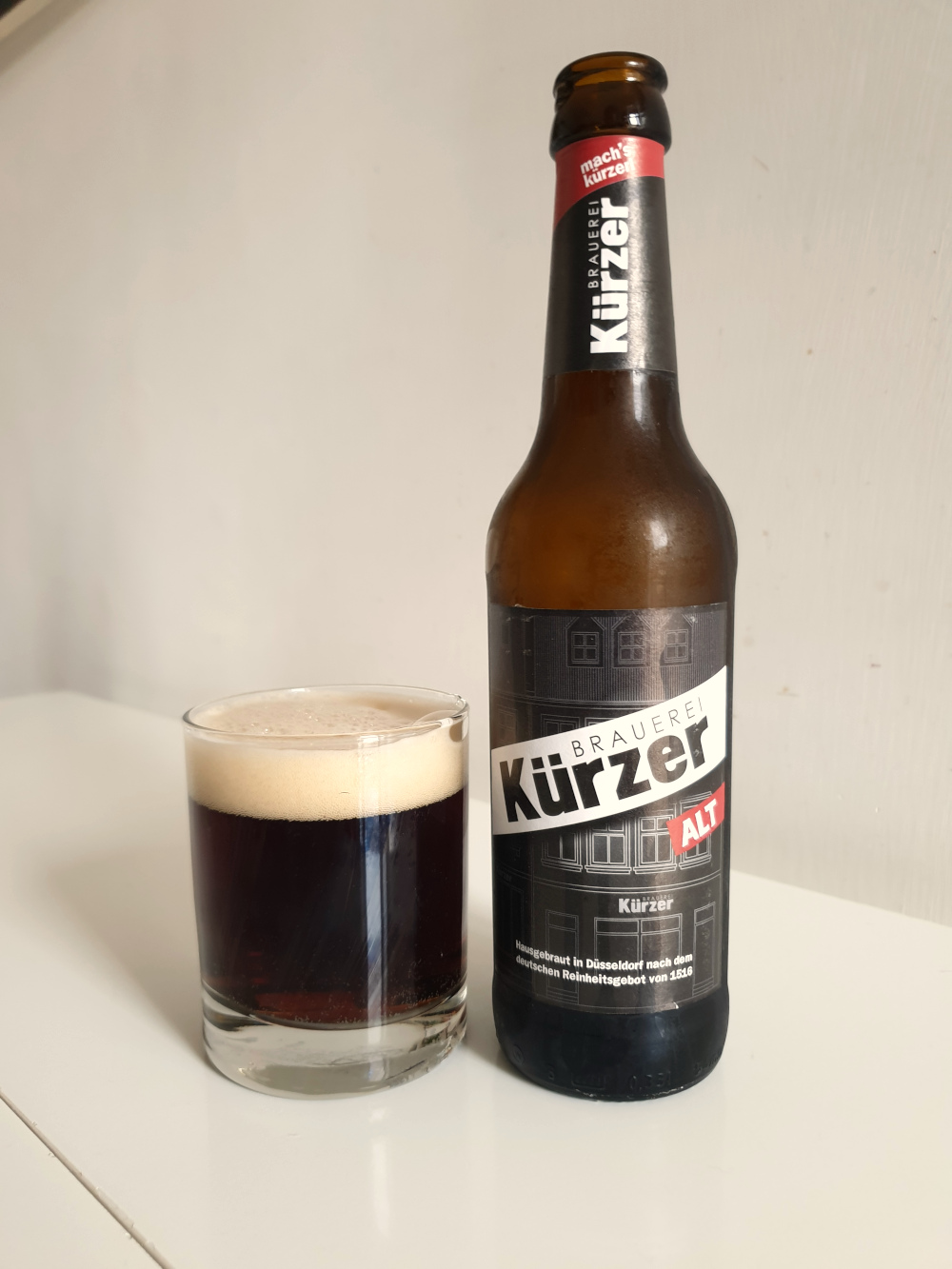
Best before: 5 March 2026 (expires in 8 days).
The darkest of the flight. Mahogany in color with ruby highlights.
Medium-high aromatic intensity with notes of toasted caramel and charred bread crust. Subtle herbal and resinous hop character. Hints of dried fruit, such as date, in the background.
Bitterness is not particularly intense, reaching a medium level and likely balanced by the strong malt character. Despite being quite malty, it is not sweet and remains relatively lean and dry. There is a pronounced astringency on the finish, seemingly derived from the roasted malts.
Similar to Schlüssel and Füchschen, slightly darker and with a touch more complexity. I also thought I detected a resinous/herbaceous note on the palate, which I hadn’t noticed in the others. Although I had never tasted it before, blindly I had guessed that this glass contained the Kurzer because, in some way, it shows a more “modern” character.
Boltens Alt
Founded in 1266 in Korschenbroich, Bolten claims to be the oldest Altbier brewery in the world. It has been brewing for over 750 years. It is a quite big privately-owned brewery (it brews ca. 50.000 hectoliters per year), but it is no longer owned by the original Bolten family since 2005.
Privatbrauerei Bolten is located in Korschenbroich, a town about 20 kilometers west of Düsseldorf. Unlike the “Big Five” (like Zum Schlüssel or Uerige), Bolten does not have its own branded brewpub in the Düsseldorf Altstadt. However, its beer is widely available throughout the city.
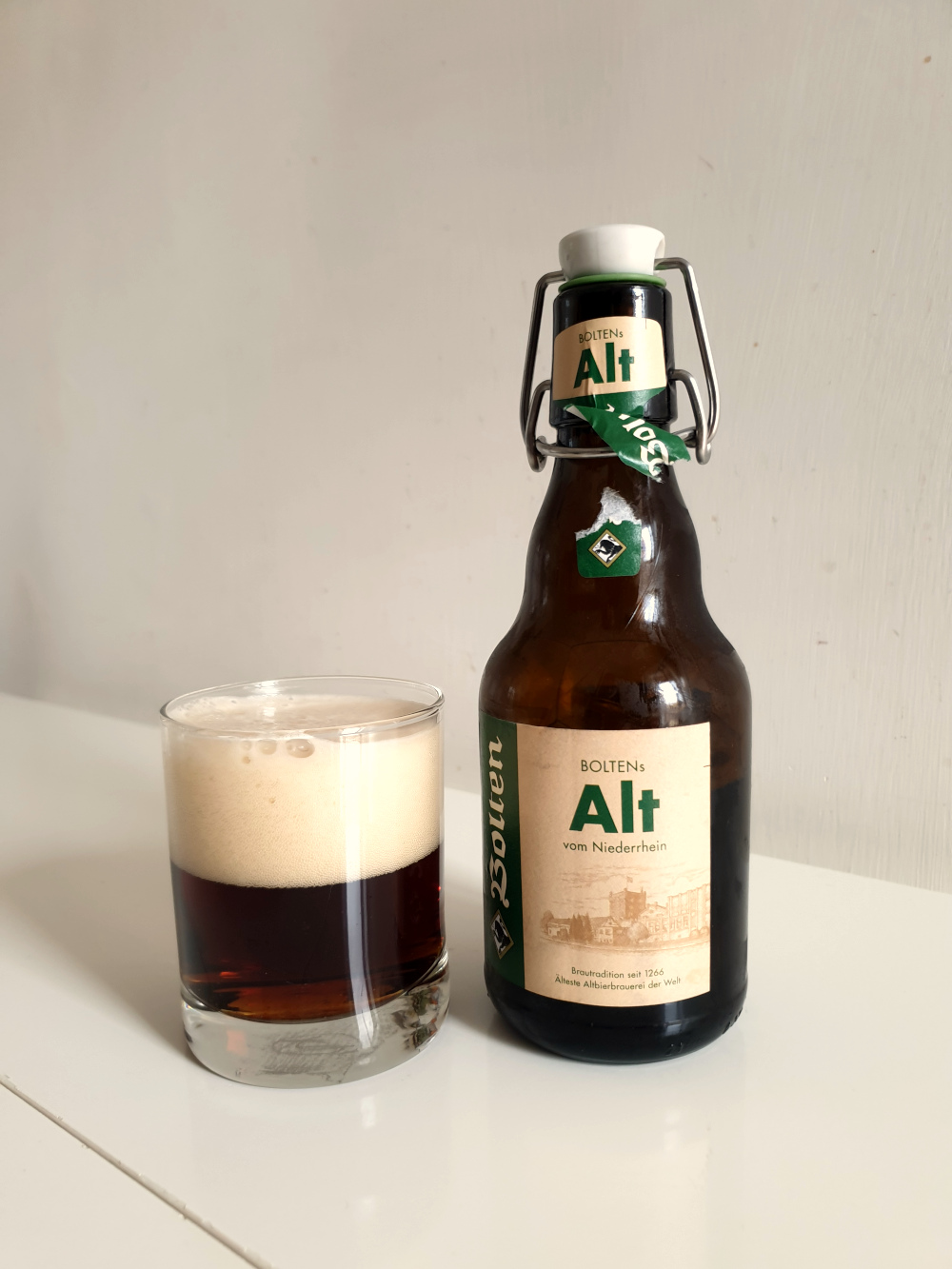
Best before: May 2026 (expires in 3 moths).
Deep amber with copper reflections.
Very light aroma with subtle notes of toasted bread and little else.
Light roasted flavors on the palate reminiscent of slightly toasted bread crust. No detectable astringency. Bitterness is medium, similar to the Kurzer but without the astringency. Good attenuation and dryness.
Overall very balanced and clean, without sharp edges. Perhaps, in some way, the least exciting of the group. But clean and well-made, it drinks very nicely.
Overall impression
With the exception of the Schumacher Alt, I got the impression that the beers were very similar to each other. All were brilliantly clear. The Kurzer was the darkest of the flight and probably the one that impressed me most during the blind tasting. I perceived a more intense hopping that made it feel more modern and perhaps more interesting. It showed a deeper complexity in the malt flavour.
The Füchschen featured light sweet notes, possibly due to a slight oxidation. Nevertheless, it remained quite good. On the palate, the bitterness was a bit sharp and astringent, perhaps again as a result of the oxidation.
The Schumacher is very different from the others, both in color and organoleptic profile. I particularly enjoyed the citrus notes and the firm yet non-harsh bitterness. In the long run, it is perhaps the most drinkable of the flight, even if it appears less complex and possibly less interesting upon analytical tasting.
Overall, I did not detect any fermentation esters in any of these beers. In some cases, such as the Kurzer, there were light dried fruit notes likely derived from the malts. Interestingly, the slight astringency noted in the BJCP guidelines was quite common across several samples.
The defining characteristic I found in these beers, however, is that despite the malt intensity, they are all quite dry, with a distinct bitterness and never cloying.